
Wallpaper services
Good paper starts
with the right service.
Wallpaper is not one kind of work. The material, the existing finish and the condition of the wall determine what belongs in the plan.
Wallpaper
installation
The design starts before the first strip is hung. Roll width, repeat and any panel sequence affect where the pattern begins and how it meets doors, corners and the ceiling. A strong motif may need a different starting point from a quiet texture.
Our installers consider the product instructions, adhesive method and surface condition together. Traditional papers may call for paste on the wall or on the paper; pre-pasted products have their own activation requirements. Those methods should not be substituted simply because two rolls look alike.
A plumb starting line helps guide the layout even when the room’s edges are not perfectly square. Trimming at openings, handling seams and working around features are part of the scope. Final appearance still depends on the material itself: some coverings show intentional paneling, texture or natural variation.
Wallpaper
removal
Old wallpaper, adhesive and the underlying surface do not always separate cleanly. The existing material and wall condition affect the removal approach and what may need attention afterward.
Removal can reveal loose paint, previous repairs or adhesive residue that was hidden by the covering. Discussing that possibility early helps distinguish taking down the old paper from preparing the wall for its next finish. Wallpaper should not be used to hide an unresolved moisture or stability problem.
Understand the project scopePeel-and-stick
installation
Self-adhesive wallpaper removes the separate paste step, not the need for a suitable wall. Texture, dust, paint finish and curing can influence adhesion. The selected manufacturer’s guidance should lead the decision.
Panels still need alignment, controlled placement and trimming around room features. “Removable” does not make a product appropriate for every surface or promise damage-free removal from any paint.
Read the self-adhesive notesWall
preparation
A visually smooth wall can still need preparation. The surface should be clean, dry, sound and compatible with the chosen covering; loose paint, residual paste and uneven areas can affect adhesion or show through the finish.
Preparation may involve discussing surface repairs or an appropriate wallcovering primer. Fresh paint needs to satisfy the product’s curing requirements. There is no universal waiting period or primer choice that fits every wallpaper.
Read about surface suitabilitySpecialty
wallcoverings
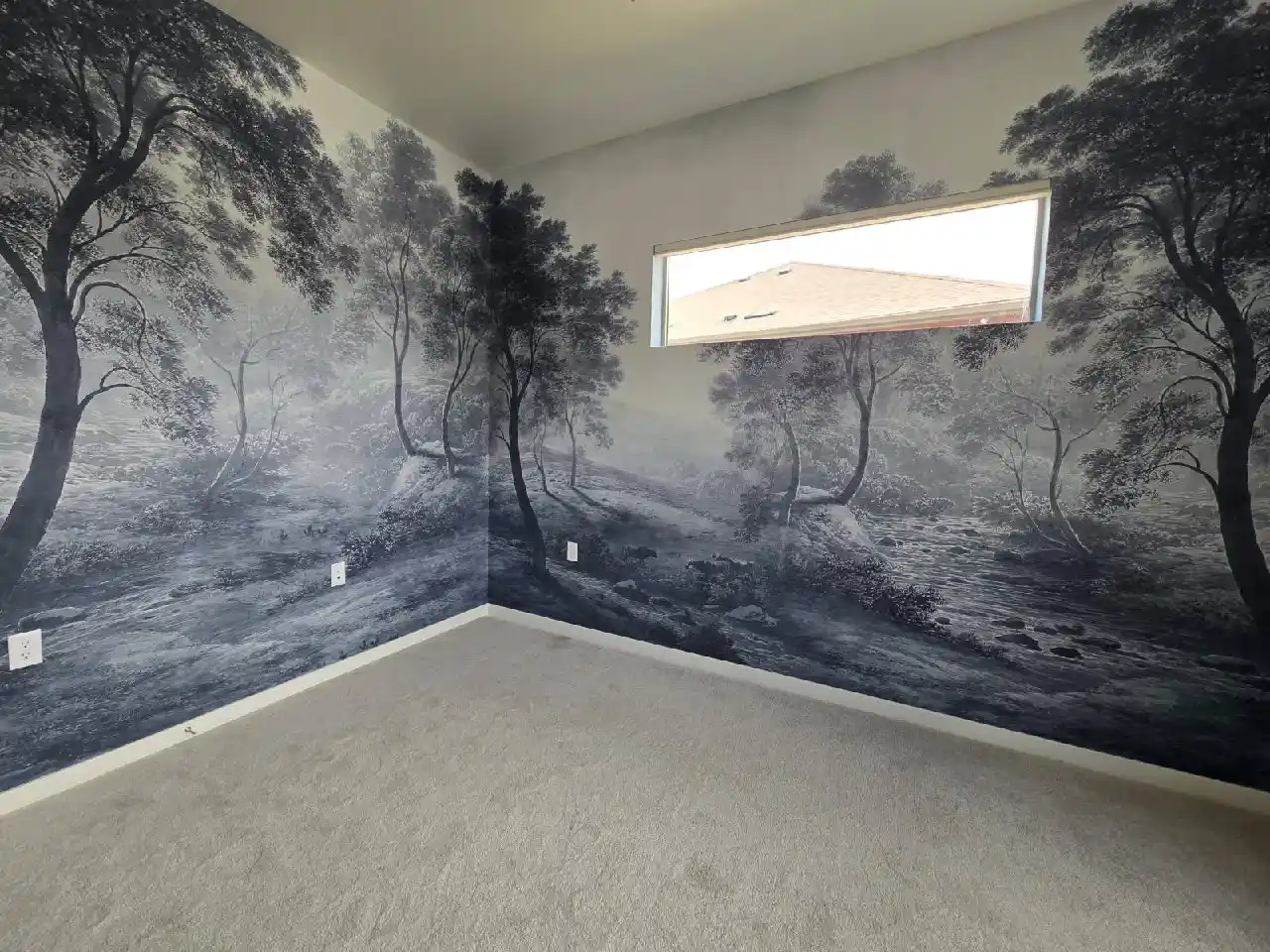
Some wallcoverings bring more specific handling and appearance requirements. A selected textured material or mural can call for attention to panel sequence, material variation or a particular adhesive method.
Tell us which product you are considering so that its suitability and installation scope can be discussed. We do not assume every specialty product belongs on every wall, and material characteristics should be understood before ordering.
Look closer at the materialCommercial
wallpaper
A commercial installation has to consider how a space is used as well as how it looks. Product specifications, access and the condition of the substrate help define the work. Availability, site arrangements and project requirements need to be discussed directly.
For a more focused look at commercial scope and preparation, explore our dedicated page.
Explore commercial wallcovering